
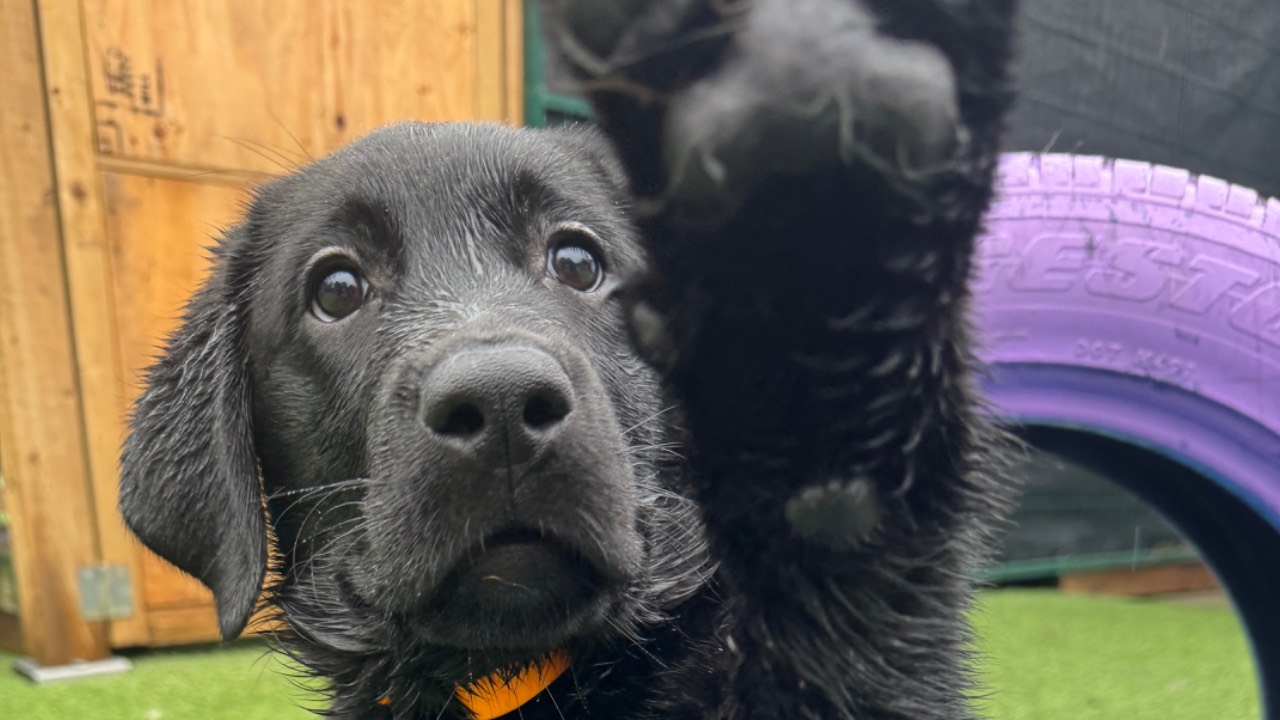
Letting Puppies Be Puppies
Nov 06, 2025At Woofability Academy, one of the most common questions we hear when families bring home their new puppy is:
“What’s the step-by-step training plan?”
Everyone wants to know what their puppy should be able to do by three months, four months, five months, and beyond. Expectations are often high right from the start, many owners imagine that their puppy should already sit, stay, walk politely on leash, and behave perfectly from day one.
Our answer is always the same:
Yes, we want to teach good manners and foundational skills. But most importantly, your puppy needs to be a puppy, to play, explore, and discover the world around them.
The Importance of Letting Puppies Be Puppies
Puppies learn through play and exploration. They need to run through the grass, climb over logs, slide across floors, splash in puddles, meet new people, and sometimes make a few clumsy mistakes.
These moments are more than cute, they’re essential to healthy development. Curiosity builds confidence, and small challenges teach resilience. If we constantly rush to protect our puppy from every stumble or avoid letting them try new things, we limit their ability to grow into calm, adaptable adult dogs.
Training and Life Experience Go Hand-in-Hand
Letting a puppy explore doesn’t mean allowing chaos or unsafe behaviour. This is where foundation training comes in, guiding your puppy with structure and gentle boundaries while encouraging curiosity.
Training isn’t just about obedience commands like sit or stay. It’s about helping your dog understand the world, build problem-solving skills, and learn to feel secure. A well-rounded puppy learns that people, places, and situations are safe and predictable, that’s the foundation for a confident, easy-going adult dog.
Finding the Right Balance
A happy, well-behaved dog comes from a balance of structure and freedom, work and play.
Work Hard, Play Hard
Training sessions help your puppy learn focus and self-control, but playtime, sniffy walks, and a good roll in the grass are just as important. Play builds joy, strengthens your bond, and creates a dog who wants to listen.
Confidence Building
Gradual exposure to new sights, sounds, and surfaces, in a calm, positive way , helps your puppy learn that the world is safe and manageable. Confidence comes from small wins, not from pushing too far too fast.
Training Through Everyday Life
The best training happens during daily routines. Waiting at doors, sitting before meals, walking calmly on leash, and settling quietly at home all reinforce good manners naturally.
Goals and Growth
Every puppy develops at their own pace. We set general goals, but the timeline should always fit the individual dog. A confident, relaxed puppy today will learn faster and more reliably tomorrow.
Training should be enjoyable for both of you — filled with patience, encouragement, and positive reinforcement. True learning happens when your puppy feels safe and supported, not pressured or corrected into perfection.
The Long-Term Goal
Our goal at Woofability Academy isn’t perfection, it’s partnership. We want to help families raise dogs who are confident, curious, and comfortable wherever life takes them.
If we focus only on control, we risk missing the joy of connection. But when we balance learning with exploration, our dogs grow into calm, happy companions who love to work with us, not just for us.
So, as you raise your puppy, remember:
Let them play. Let them explore. Let them make small, safe mistakes and learn from them.
Because a happy, well-balanced puppy grows into a confident, loving adult dog, and that’s what truly makes training successful.
Don't miss a beat!
New moves, motivation, and classes delivered to your inbox.
We hate SPAM. We will never sell your information, for any reason.